Greetings,
I had a great time speaking at EASTEC Tuesday.
Here is a snippet of the talk…
Robert Kravontka
The Maintenance Geek

5 Steps to a World Class Maintenance Organization for the Small Manufacturer
Are your best maintenance professionals ready to retire?
Do your younger people need to work smarter not harder?
In General, breakdowns are 5 to 10 times more expensive that preventing it in the first place.
My new book 5 Steps to a World Class Maintenance Organization is out and available on Amazon.com http://amzn.to/2c78hia
If you want a signed copy send me an e mail at: robert@maintenancegeek.com
I will get it out to you quickly. Let me know who and where.
Here are some highlights of what to expect.
Step 1: Rank your Equipment and collect some simple data.
Step 2: Control your critical spare parts.
Step 3 Stop Wasted PMs
Step 4 Focused Improvement Events
Step 5 Formal Training
5 Steps to a World Class Maintenance Organization for the Small Manufacturer
Are your best maintenance professionals ready to retire?
Do your younger people need to work smarter not harder?
In General, breakdowns are 5 to 10 times more expensive that preventing it in the first place.
My new book 5 Steps to a World Class Maintenance Organization is coming out next week.
Here are some highlights or what to expect.
Step 1: Rank your Equipment and collect some simple data.
Step 2: Control your critical spare parts.
Step 3 Stop Wasted PMs
Step 4 Focused Improvement Events
Step 5 Formal Training
Putting it all together.
The Big Picture
Identify the Critical Equipment. Pick your top three pieces of equipment that will hurt the most in terms of production or cost to repair, or whatever is the most detrimental to the business if it goes down. Then pick the next two pieces of equipment that are the biggest pain in the butt in terms of taking your time and effort.
Collect Data Identify a cost per machine for maintenance and then OEE in order of criticality. With this data attack the 6 major losses starting with idling and minor stoppages
Control your spare parts and tools. Identify what you have, 5S the spare parts area so you can get rid of what you no longer need and can find what is left. Determine what must be stocked, 24 hour rule, and mission critical parts.
Address your Skills Gap Even if it is one person, what skills do they have and what are needed.
Predict failure before is occurs.Start using predictive tools, like Ultrasound for bearing anomalies and air leaks. Infrared for motor temperature issues and alignment.
Get out of the breakdown mode.Start to change your mind set. Instead of how do we fix this as quickly as possible, start to look at your most critical and troublesome pieces of equipment and think about “What do we do to keep equipment running”.
Where are you on the PF curve?

Understand the P-F Curve.
Reactive mode putting out fires, only doing repairs when the equipment is broken.
Predictive mode, using some predictive tools, like oil analysis, vibration analysis, or thermography.
Proactive mode. You have ranked your equipment, started collecting data and recorded it somewhere. You actually look at it and use it.
Get Money allocated: Work on convincing the corner office. Speak their language of dollars and cents to get funds available to update critical equipment, $1 dollar spent on preventative and predictive maintenance can translate to 5-10 dollars spend in breakdown mode.
This is how to get out of the breakdown mode.
5 Steps to a World Class Maintenance Organization is ready to be published next week.
Send me a note if you would like a discounted signed copy when it comes out. robert@maintenancegeek.com
Thanks,
Robert Kravontka
The Maintenance Geek

 Step 1: Rank your Equipment and collect some simple data.
Step 2: Control your critical spare parts.
Step 3 Stop Wasted PMs
An example would be doing a PM in an electrical panel, the goal is to tighten the 100 or so connections, typically 1 or 2 will need tightening. This is mind numbing work, and can lead to damaged connectors. Unintended consequences. If predictive tools were used, like an infra-red camera, only the 1 or 2 connections would need to be tightened, and the broken connector would have been avoided.
Predictive Equipment:
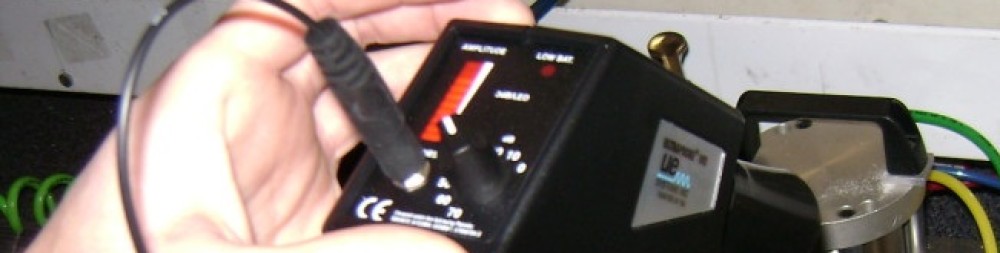
Ultra Sound for air leaks, proper bearing lubrication, and steam trap health.
Infra-Red for motor life, any motor over 150 degrees needs to be watched, motor life drops off exponentially with each 20 degrees of temperature increase. Loose electrical connections, are a safety and fire hazard. Process anomalies like furnace insulation, along with facility monitoring like roofs and air infiltration can pay for the equipment with lower energy costs.
Oil Analysis to extend intervals between changes. Accomplish this by a route based oil testing program.
Vibration Analysis to predict a host of motor, connector, and bearing issues.
Operators can be very predictive. They must own their machines and communicate the health of their machines to maintenance.
This picture is a Zebra card that shows oil level. This also shows quality, as it is not milky or speckled with contaminants, or discolored from heat. 
Get trained in Oil Analysis, Thermography, Vibration and Ultrasound. There is lots of free training available from the equipment manufacturers. You can hire this equipment out or rent it.
Want to know more, go to the upper right and sign up for the next exciting episode of the Maintenance Geek Blog.
Look out for my upcoming book. 5 steps to a World Class Maintenance Organization.
Robert Kravontka
The Maintenance Geek
Try spending the money you save from a good air leak survey on some tools to keep you out of the breakdown mode.

Scenario #1 200 HP of compressed air, 100 HP full time and 100 HP as backup. house pressure is 107 to maintain 100 PSI throughout the system. 150 gallons of accumulation, typically we like to see 4 gallons per HP. This is a 3 shift operation 300 days per year. Operations include machining centers, screw machines and plating.
Over $50,000.00 of wasted air leaks were found, nearly 17% of their total energy bill.
Scenario #2 40 HP plus 25 HP 90% loaded at 110 PSI. 200 gallons of accumulation was available. This operation ran 3 shifts per day and 360 days per year. This anodizing operation was greatly automated, lots of air controls.
Over $18,000.00 were found in wasted compressed air.
Typically we find between $80 – $160 dollars per Horsepower per shift in waste. How many Horsepower does you shop run. Leaks are cheap to find with the right equipment and cheap to fix.
How could you use an extra $10,000 to $50,000 per year to grow your business or improve your maintenance department?
Give me a call at the Maintenance Geek LLC to find out more.

Thanks, Robert “The Maintenance Geek”
(203) 510 – 8575

Compressed air leaks, and inefficient blow offs can waste thousands of dollars of electricity each year. This affects your companies production costs and bottom line.
What are the 6 steps to optimize your compressed air system?
High efficiency nozzles High efficiency air knives High efficiency blow offs
 The Maintenance Geek LLC is proud to be a stocking distributor for Exair the home of intelligent compressed air products
E Mail me for a catalog and to get 10% off of current pricing. robert@maintenancegeek.com
Click in the upper right hand corner to get this blog sent to you as soon as it is published.→
Robert Kravontka “The Maintenance Geek ”
What is the “Business Sustainability Challenge” and why should I care?
New England Utilities offer the Business sustainability Challenge. With a small team your company can become more competitive by taking a strategic look at Energy, Workforce, Operations, and Waste Streams. Results from this planning include reducing risks and leveraging opportunities to shield your company from, changes in the economy, while improving operations and profitability. The utility will fund this effort 100% and offer incentives to grow along the way. You need to supply a small team, 3-5 people to develop a growth strategy with help from some of the great teachers in the industry.
Send me a note, and I will send you a form, to see if your company qualifies.
We have seen some great results. Let me know if you want to find out more.
Robert The Maintenance Geek
Click in the upper right to sign up for the blog series.
Planning a June 2016 release of my new E Book called “5 Steps to a World Class Maintenance Organization” This is designed for the smaller manufacturer with a maintenance group of one or a few who do it all, including building and equipment maintenance.
Are your best Maintenance People getting ready to retire?
Do your younger newer maintenance professionals need to work smarter not harder?
How would an increase in productivity benefit your company?
Would reducing your maintenance Costs Help?
Are you getting tired of putting out fires all the time?
Does your equipment go down when you need it most?
Take a look at the 5 steps to help you get out of that breakdown mode.
We are going to have some fun with a method to help yourself and your company.
Step 1: Look at the building blocks of Maintenance
Step 2: Control your spare parts
Step 3: Stop Wasted PM’s
Step 4: Focused Improvements
Step 5: Formal Training
Then we will put it all together.
Click in the upper right to follow my blog…
Thanks,
Robert Kravontka The Maintenance Geek
 Greetings,
Attended a terrific meeting in North Haven at the Energize CT Center finding out how to better save energy in 2016. Kevin Vidmar from Loureiro Engineer Associates spoke. Terrific presentation on energy systems, including; Lighting, Motors, Compressed Air, Dust Collection, HVAC, and Office Equipment.
We started by understanding conservation vs efficiency. Basically shut it off whenever possible and then use the most efficient models when you must use a load.
Lighting, understand where you need light, and how much, then shut it off when you do not need it.LED’s have come down in price and are well subsidized by the utilities.
Motors typically cost around $0.10 per HP/ Hour to operate and save you that much when you can shut them off. Motors consume 50-70% of all electricity in the country. When you must run your motors reduce the load by insuring good alignment, proper belt tension , good lubrication practices and proper pipe sizing. Try to eliminate Air motors in your operation, they are cheaper to purchase but are huge wasters of energy.
Compressed Air often called the 4th Utility, can consume up to 25% of a typical manufacturers electric bill. Extra air storage can help, you should have approximately 4 gallon per HP. It generally costs $5 per gallon to install more but may be well worth it. Make sure your compressor air inlets are drawing cool well filtered air. If you use air to blow parts out of a process use low vortec nozzles, and cut your house pressure. A 2 PSI drop in pressure can save 1% of your electric bill.
Have a pro look at your system and enjoy some huge saving.
Next month we will talk about the 5 steps to get out of the breakdown mode, and save some energy to boot.
Click on the upper right to sign up for the series of training’s to get out of the breakdown mode. Talk with you next week.
Robert The Maintenance Geek

Are your Best Maintenance People retiring this year?
Do your younger maintenance professionals need to work smarter not harder?
The issue most companies with manufacturing equipment face is how to get out of the breakdown mode.
Over the next 6 months we will discuss the 5 steps to get out of the breakdown mode.
Over the next 6 months we will discuss the steps and what will work for you.
Expect a June 2016 release of my new E – Book “5 Steps to get out of the Breakdown Mode”.
We will talk about what the Utilities and Government can do to help fund our efforts to get out of the breakdown mode.
There are also steps you can take right away, to generate income to pay for your journey and get buy in from senior management.
Stay tuned.
Let me know what you think!