Greetings,
I had a great time speaking at EASTEC Tuesday.
Here is a snippet of the talk…
Robert Kravontka
The Maintenance Geek

Please mark you calendars: Tuesday May 16th at 3:50 pm.
Register today and get ready for the EASTEC experience, including:
You already know how valuable a trip to EASTEC can be for your business. Register now and mark your calendar to attend in May 2017.
Visit easteconline.com to view the exhibitor list, floor plan, featured technologies and much more.
SHOW LOCATION:
Eastern States Exposition
1305 Memorial Ave
West Springfield, MA 01089
SHOW HOURS:
Tuesday, May 16
9:00 a.m. – 5:00 p.m.
Wednesday, May 17
9:00 a.m. – 5:00 p.m.
3:50 – 4:25 come and hear the Maintenance Geek speak on the 5 steps to get out of the BREAKDOWN mode.
Thursday, May 18
9:00 a.m. – 3:00 p.m.
Hope to see you there.

May 16-18, 2017 | Eastern States Exposition, West Springfield, Massachusetts
Here is the letter I received:
Dear Robert:
On behalf of SME, thank you for submitting an abstract for EASTEC 2017. We are pleased to inform you that your abstract, “5 Steps to Get Out of the Break Down Mode“, has been accepted for presentation at this event taking place May 16-18, 2017 at the Eastern States Exposition in W. Springfield, MA. You play an important role in the educational program, and we look forward to working with you in the coming months. Specific details regarding the day and time of your presentation will be sent to you within the next few weeks.
As soon as I find out the date and time I will put it up here.
Register today and get ready for the EASTEC experience, including:
You already know how valuable a trip to EASTEC can be for your business. Register now and mark your calendar to attend in May 2017. Simply click here to update your contact information and complete your EASTEC 2017 registration.
Visit easteconline.com to view the exhibitor list, floorplan, featured technologies and much more.
SHOW LOCATION:
Eastern States Exposition
1305 Memorial Ave
West Springfield, MA 01089
SHOW HOURS:
Tuesday, May 16
9:00 a.m. – 5:00 p.m.
Wednesday, May 17
9:00 a.m. – 5:00 p.m.
Thursday, May 18
9:00 a.m. – 3:00 p.m.
Thanks,
Robert
The Maintenance Geek

5 Steps to a World Class Maintenance Organization for the Small Manufacturer
Are your best maintenance professionals ready to retire?
Do your younger people need to work smarter not harder?
In General, breakdowns are 5 to 10 times more expensive that preventing it in the first place.
My new book 5 Steps to a World Class Maintenance Organization is out and available on Amazon.com http://amzn.to/2c78hia
If you want a signed copy send me an e mail at: robert@maintenancegeek.com
I will get it out to you quickly. Let me know who and where.
Here are some highlights of what to expect.
Step 1: Rank your Equipment and collect some simple data.
Step 2: Control your critical spare parts.
Step 3 Stop Wasted PMs
Step 4 Focused Improvement Events
Step 5 Formal Training
5 Steps to a World Class Maintenance Organization for the Small Manufacturer
Are your best maintenance professionals ready to retire?
Do your younger people need to work smarter not harder?
In General, breakdowns are 5 to 10 times more expensive that preventing it in the first place.
My new book 5 Steps to a World Class Maintenance Organization is coming out next week.
Here are some highlights or what to expect.
Step 1: Rank your Equipment and collect some simple data.
Step 2: Control your critical spare parts.
Step 3 Stop Wasted PMs
Step 4 Focused Improvement Events
Step 5 Formal Training
Putting it all together.
The Big Picture
Identify the Critical Equipment. Pick your top three pieces of equipment that will hurt the most in terms of production or cost to repair, or whatever is the most detrimental to the business if it goes down. Then pick the next two pieces of equipment that are the biggest pain in the butt in terms of taking your time and effort.
Collect Data Identify a cost per machine for maintenance and then OEE in order of criticality. With this data attack the 6 major losses starting with idling and minor stoppages
Control your spare parts and tools. Identify what you have, 5S the spare parts area so you can get rid of what you no longer need and can find what is left. Determine what must be stocked, 24 hour rule, and mission critical parts.
Address your Skills Gap Even if it is one person, what skills do they have and what are needed.
Predict failure before is occurs.Start using predictive tools, like Ultrasound for bearing anomalies and air leaks. Infrared for motor temperature issues and alignment.
Get out of the breakdown mode.Start to change your mind set. Instead of how do we fix this as quickly as possible, start to look at your most critical and troublesome pieces of equipment and think about “What do we do to keep equipment running”.
Where are you on the PF curve?

Understand the P-F Curve.
Reactive mode putting out fires, only doing repairs when the equipment is broken.
Predictive mode, using some predictive tools, like oil analysis, vibration analysis, or thermography.
Proactive mode. You have ranked your equipment, started collecting data and recorded it somewhere. You actually look at it and use it.
Get Money allocated: Work on convincing the corner office. Speak their language of dollars and cents to get funds available to update critical equipment, $1 dollar spent on preventative and predictive maintenance can translate to 5-10 dollars spend in breakdown mode.
This is how to get out of the breakdown mode.
5 Steps to a World Class Maintenance Organization is ready to be published next week.
Send me a note if you would like a discounted signed copy when it comes out. robert@maintenancegeek.com
Thanks,
Robert Kravontka
The Maintenance Geek

Are your best maintenance professionals ready to retire? 
Do your younger people need to work smarter not harder?
In General breakdowns are 5 to 10 times more expensive that preventing it in the first place.
My new book 5 Steps to a World Class Maintenance Organization is in final proof
Here are some highlights or what to expect.
Step 1: Rank your Equipment and collect some simple data.
5 Steps to a World Class Maintenance Organization for the Small Manufacturer
Step 2: Control your critical spare parts.
Step 3 Stop Wasted PMs
Step 4 Focused Improvement Events
Step 5 Formal Training
90% of all present maintenance professionals are not formally trained
World Class Maintenance shows up directly in the Bottom Line. Fight for budget money with Dollar Based Arguments. The nuts and bolts guys must be able to talk to the brains and bucks guys to show the value of a world class maintenance program. Typically manufacturers see a 10 times increase in production to training dollar expended.
Assess your skills gap.
Set goals and prioritize the path to filling your skills gaps.
Out Source some of your Maintenance Duties. Effective PM’s can be done by the equipment manufacturers, and they can help you develop a program your people can follow. There are many companies offering this service on a contract basis.
Look for funding for maintenance training. It is available at many Department of labor offices and your state MEPs. (Manufacturing Extension Partnerships).
5 Steps to a World Class Maintenance Organization is ready to be published, in August 2016.
Send me a note if you would like a discounted signed copy when it comes out.
Thanks,
Robert Kravontka
The Maintenance Geek
Step 1: Rank your Equipment and collect some simple data.
5 Steps to a World Class Maintenance Organization for the Small Manufacturer
Step 2: Control your critical spare parts.
Step 3 Stop Wasted PMs
Step 4 Focused Improvement Events
Set up an event with one of your most critical pieces of equipment. Who should be the Players in your focused improvement event? Maintenance Personnel , Operations Management, Operators, Engineering, Finance, Material handlers, getting someone from the “C” suite will add a lot of credibility to the program.
Develop the “keep it running” mindset vs the “fix it when it breaks” historic plan.
Sit back and look at these critical pieces of equipment, once you have them running in like new condition, ask what it will take to keep them running? Not what do we need to keep on hand to fix it the next time it goes down.
The focused improvement event plan is to shut it down, take it apart, clean it, then put it back together in like new condition. Put it in its most productive state.
Now the goal will be to develop countermeasures to contamination, lubrication and access.
Here is what you should include in a typical focused improvement event:
Duplicate this effort on the next most critical machines
Here is an example of a walk around sheet with visuals to help even new operators see what they are looking for, and alert maintenance when something of out of spec..
5 Steps to a World Class Maintenance Organization is ready to be published, in August 2016.
Send me a note if you would like a discounted signed copy.
Thanks,
Robert Kravontka
The Maintenance Geek
Step 1: Rank your Equipment and collect some simple data.
Step 2: Control your critical spare parts.
Step 3 Stop Wasted PMs
An example would be doing a PM in an electrical panel, the goal is to tighten the 100 or so connections, typically 1 or 2 will need tightening. This is mind numbing work, and can lead to damaged connectors. Unintended consequences. If predictive tools were used, like an infra-red camera, only the 1 or 2 connections would need to be tightened, and the broken connector would have been avoided.
Predictive Equipment:
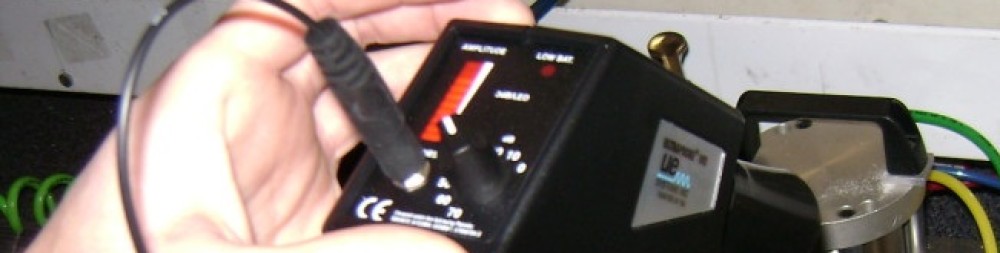
Ultra Sound for air leaks, proper bearing lubrication, and steam trap health.
Infra-Red for motor life, any motor over 150 degrees needs to be watched, motor life drops off exponentially with each 20 degrees of temperature increase. Loose electrical connections, are a safety and fire hazard. Process anomalies like furnace insulation, along with facility monitoring like roofs and air infiltration can pay for the equipment with lower energy costs.
Oil Analysis to extend intervals between changes. Accomplish this by a route based oil testing program.
Vibration Analysis to predict a host of motor, connector, and bearing issues.
Operators can be very predictive. They must own their machines and communicate the health of their machines to maintenance.
This picture is a Zebra card that shows oil level. This also shows quality, as it is not milky or speckled with contaminants, or discolored from heat. 
Get trained in Oil Analysis, Thermography, Vibration and Ultrasound. There is lots of free training available from the equipment manufacturers. You can hire this equipment out or rent it.
Want to know more, go to the upper right and sign up for the next exciting episode of the Maintenance Geek Blog.
Look out for my upcoming book. 5 steps to a World Class Maintenance Organization.
Robert Kravontka
The Maintenance Geek
Step 1: Rank your Equipment and collect some simple data.
Step 2: Control your critical spare parts.
Use these questions to decide what is critical.
Rule-of-Thumb:
If you must have it to satisfy customer demand, stock it.
If it cannot be obtained within 24 – 48 hours stock it.
The cost has No Impact stock it.
Want to know more, go to the upper right and sign up for the next exciting episode of the Maintenance Geek Blog.
Robert Kravontka
The Maintenance Geek
5 Steps to a World Class Maintenance Organization for the Small Manufacturer
Step One:
It’s the same for big companies or smaller ones, you need to figure out where you are and what your up against. If you have only one maintenance professional that does the facility and all the equipment but only when it breaks down the issues are the same.
You must start with some data.
Think of it as a doctor’s visit. Your doctor will not prescribe a medication or solution before he examines you and collects some data. At a minimum, blood pressure, weight, temperature, and what “you” think is wrong?
Should it be any different trying to diagnose your maintenance process, before you prescribe some remedies?
Collect Data. Simple Stuff.
What are your critical pieces of equipment? Look for the top 3-5 and learn about them.
Rate them in order of criticality. How much trouble will you be in when they go down, and how expensive will they be to get back up. It is a lot cheaper to keep them running than to fix them after they go down.
What skills are at your disposal? You may be surprised at some of the hidden talent.
What do you need to do to keep the equipment running vs. trouble shooting it and fixing it? Get out of the breakdown mode.
OEE is more important as you start to flow your products. If one component of the cell stops, the entire cell stops. OEE multiplies as more equipment is added to a cell.
Evaluate your maintenance department. Are they doing the right things, can they be doing better PM’s and less “time” based preventive maintenance? How about some predictive maintenance to catch the issues before they bite you.

Consider training your operators to be the eyes and ears for maintenance, put in some visuals to make it easier for them.
Its not easy when you have a small maintenance group, but neither are the bigger ones, that’s why “they” make the medium bucks. The principles are the same. Breakdowns are 5 – 10 times more expensive than preventing a breakdown.
Want to know more, go to the upper right and sign up for the next exciting episode of the Maintenance Geek Blog.
Robert Kravontka
The Maintenance Geek