Step “One” in Developing a World Class Maintenance Organization

Snapshot_24


Step One:

It’s the same for big companies or smaller ones, you need to figure out where you are and what your up against. If you have only one maintenance professional that does the facility and all the equipment but only when it breaks down the issues are the same.

You must start with some data. 

Think of it as a doctor’s visit. Your doctor will not prescribe a medication or solution before he examines you and collects some data. At a minimum, blood pressure, weight, temperature, and what “you” think is wrong?

Should it be any different trying to diagnose your maintenance process, before you prescribe some remedies?

Collect Data.        Simple Stuff.

What are your critical pieces of equipment? Look for the top 3-5 and learn about them.

Rate them in order of criticality. How much trouble will you be in when they go down, and how expensive will they be to get back up. It is a lot cheaper to keep them running than to fix them after they go down.

What skills are at your disposal?   You may be surprised at some of the hidden talent.

What do you need to do to keep the equipment running vs. trouble shooting it and fixing it? Get out of the breakdown mode.

OEE is more important as you start to flow your products.  If one component of the cell stops, the entire cell stops. OEE multiplies as more equipment is added to a cell.

 Evaluate your maintenance department. Are they doing the right things, can they be doing better PM’s and 7less “time” based preventive maintenance? How about some predictive maintenance to catch the issues before they bite you.       


gauge with marker


Consider training your operators to be the eyes and ears for maintenance, put in some visuals to make it easier for them.


Its not easy when you have a small maintenance group, but neither are the bigger ones, that’s why “they” make the medium bucks.  The principles are the same.       Breakdowns are 5 – 10 times more expensive than preventing a breakdown.


Want to know more, go to the upper right and sign up for the next exciting episode of the Maintenance Geek Blog.


cropped-snapshot_001.jpgRobert Kravontka

The Maintenance Geek

robert@maintenancegeek.com

Does your business have a good plan to Grow? How the Business Sustainability Challenge can help!

 What is the “Business Sustainability Challenge” and why should I care?BSC

New England Utilities offer the Business sustainability Challenge. With a small team your company can become more competitive by taking a strategic look at Energy, Workforce, Operations, and Waste Streams. Results from this planning include reducing risks and leveraging opportunities to shield your company from, changes in the economy, while improving operations and profitability. The utility will fund this effort 100% and offer incentives to grow along the way. You need to supply a small team, 3-5 people to develop a growth strategy with help from some of the great teachers in the industry.

Send me a note, and I will send you a form, to see if your company qualifies.

We have seen some great results.  Let me know if you want to find out more.


Robert                                                                                                                                                          The Maintenance Geek

snapshot_001Click in the upper right to sign up for the blog series.

Introducing 5 Steps to a World Class Maintenance Organization

Snapshot_24Planning a June 2016 release of my new E Book called “5 Steps to a World Class Maintenance Organization” This is designed for the smaller manufacturer with a maintenance group of one or a few who do it all, including building and equipment maintenance.

Are your best Maintenance People getting ready to retire?

Do your younger newer maintenance professionals need to work smarter not harder?

How would an increase in productivity benefit your company?


Would reducing your maintenance Costs Help?

Are you getting tired of putting out fires all the time?

Does your equipment go down when you need it most?

Take a look at the 5 steps to help you get out of that breakdown mode.

We are going to have some fun with a method to help yourself and your company.

Step 1: Look at the building blocks of Maintenance

Step 2: Control your spare parts

Step 3: Stop Wasted PM’s

Step 4: Focused Improvements

Step 5: Formal Training

Then we will put it all together.


Click in the upper right to follow my blog…

Thanks,

Robert Kravontka                                                                                                                                         The Maintenance Geek

snapshot_001

Predictive Maintenance is getting easier all the time with this attachment to your I Phone…


Greetings…                             

I  took this with My I Phone…

It's not just to tell how hot your coffee is any more.

It’s not just to tell how hot your coffee is any more.

If you are trying to get out of the breakdown mode, you don’t have to worry about the high cost of predictive tools.  This will get you some OK temperature readings, along with a GPS location and over a decent digital photo.   Combine this with an ultrasound leak detector and  you will pay both of them off in the first usage.


It costs an average of 10 times less to fix a problem before it  breaks then to fix it after it breaks.

You know about air shipping  parts.

I love new technology.

http://www.fando.com/llc/manufacturing-solutions/

Infrared #5

Snap on to the I Phone 5

Snap on to the I Phone 5

What is the cost of compressed air leaks?

I Found a good article from C.E.D. Compressed Air Inc.                                                          CED

 For many organizations, compressed air comprises a large part of an ever-growing utility bill, so now companies are beginning to analyze the true cost of compressed air leaks within their facility. The results show that compressed air leaks affect expenditures in a range of areas.


Compressor Sizing

Industrial firms purchase their compressors based on the demand in terms of air in the system. Air leaks can cause higher than necessary equipment expenditure and can also mean that equipment must be maintained on a more regular basis to ensure optimal performance in meeting demand.

Water Intrusion  

In addition to allowing air out of the system, leaks tend to let moisture in. Water migrates from the high humidity outside air to the compressed air. This water migration can potentially cause cracks in valves as large amounts of water enter the system and overload components. Companies must then dip into their budget to replace any damaged components and conduct moisture removal maintenance on their systems.

Reduced Accuracy in Air Profiling

When leaks occur, they can prevent plant managers from achieving an accurate read in terms of their air profile. In leaks where the total leak load exceeds 10% of the overall load capacity, the artificial demand caused by the leaks can prevent companies from seeing the full picture of their plant efficiency. Such leaks can lead to wasted money on air audits and other efficiency improvement measures.

What do we need to do?

By taking a proactive strategy in managing and repairing air leaks within our compressed air equipment, companies can not only improve the performance of their equipment, but save thousands of dollars annually in terms of repair and maintenance expenditures.

Try this.

A one bar (14.5 psi) decrease in pressure reduces energy consumption by seven percent. And, if there are leaks in the compressed air system, the same pressure decrease reduces the impact of the leaks by 13 percent.

Also consider that, off hours can account for 25% of your compressed air energy use. Look at minimizing this usage, segment your system and turn off areas not in use during off hours..

Access to the latest leak detection systems is now required for the proactive industrial firm.

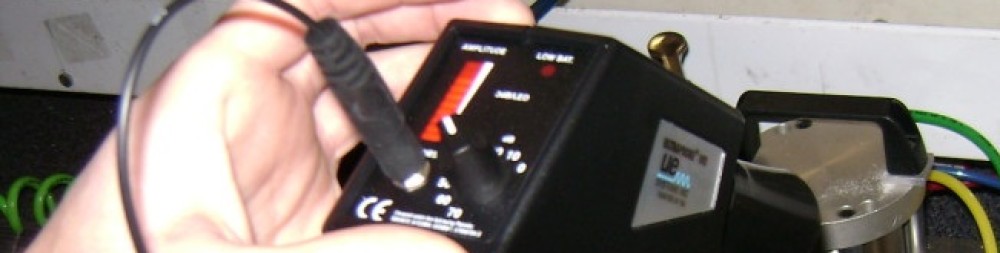
Investing in an Ultrasound System should be high on your list.

A major advantage to ultrasound leak inspection is that as a high frequency, short wave signal, ultrasound emissions tend to be localized around the leak site. By scanning an area with an ultrasound instrument, a user will follow the sound of the leak to the loudest point. Once identified, the leak amplitude can be noted and used in  a compressed gas reporting tool,  this cost analysis can tie dollars, for the use of maintenance time to fix leaks.

I have used UE Systems units, but you need to use something.                            The leaks are eating into your companies profits.

Leave me a comment if you have found a good way to get rid of your leaks.

Rusty

Here is a link to the CED article:  http://cedcompressedair.ca/blog/what-is-the-cost-of-compressed-air-leaks/

Here is a terrific Article on TPM (Total Productive Maintenance)

Greetings,

This was a terrific interview conducted by Davis Visco president of The 5S Store. 

The interview discussed how TPM raises output and finds lost money.

If you want to understand how world class maintenance can improve your companies output and save money this is a must see interview

They discuss Operator Ownership, Maintenance and Operator Partnerships, TPM Focused Improvement Events, Contamination, Lubrication, Seeing the Invisible, Maintenance Histories, OEE, Maintenance Skills, Critical Equipment ,Critical Spare Parts, Equipment Improvement Teams, and Early Equipment Management.

T.his is a worthwhile look.


Rusty

Getting Your Equipment Running Safely, Productively & Reliably

Published May 30, 2013
TPM - Learn the 5 Elements of The Reliability Wheel

This insightful interview from the President of Fuss & O’Neill Manufacturing Solutions – John Kravontka provides first hand insight into the mistakes, challenges and key principles needed to move from a mindset of keeping equipment running, to running at the highest and most efficient level.  According to John, there are 5 pieces of the puzzle that everyone needs to know.  He notes, “Operators treat equipment like a rental car, rather than as a valued piece of equipment that they actually “own” for which they take responsibility.”  Get ready to take notes on the importance of setting standards and making your process easy, effective and trackable against daily operator performance.  Also, click here to view this helpful PDF that illustrators the 5 pieces of this puzzle as detailed in this video.  John is a masterful teacher of this view of the TPM process, so look forward to more contributions from him and his team at Fuss & O’Neill.

Contributing Writer: John Kravontka

 New  0  0  0  0
Rate this item

Leave a Reply

You must be logged in to post a comment.

– See more at: http://www.effectiveflowmagazine.com/interview/getting-your-equipment-running-safely-productively-reliably/#sthash.E4NnEV1U.dpuf

What was on the CMRP exam?

Observations on the CMRP Exam

  • The five subject areas identified in the certificationguide are business management, people skills (organization & leadership), equipment reliability, process reliability, and work management (mostly maintenance planning, but also a bit of project management). Questions are drawn from these categories.
  • Plenty of time was given. There were 110 multiple-choice questions to be completed in 150 minutes. I initially answered all questions in 90 minutes and then spent another 30 minutes checking back over the entire test. having perused online bulletin boards, I found no one that took longer than 2 hours to completethe test.
  • Much less than half of the test was “technical.” If you don’t understand what vibration spectrum side bands are, you will probably still be fine. However, you will have to know what the major condition monitoring methods are, where and when to apply them, and some feeling (on the order of magnitude level) of what is “good.” Overall, the quantity of questions felt proportional to the five Body of Knowledge areas.
  • A calculator was required for 5-10% of the questions. The non-programmable calculator allowed in the test center was sufficient to answer any of those questions where a calculator was useful.
  • Real world experience and benchmarking knowledge are crucial to success. You should know how a maintenance planner should spend their time and what typical and “good” results are in a variety of M&R metrics. Know how to keep people involved and empowered without abdicating management responsibility for either the efforts or the results.