
5 Steps to a World Class Maintenance Organization for the Small Manufacturer
Are your best maintenance professionals ready to retire?
Do your younger people need to work smarter not harder?
In General, breakdowns are 5 to 10 times more expensive that preventing it in the first place.
My new book 5 Steps to a World Class Maintenance Organization is coming out next week.
Here are some highlights or what to expect.
Step 1: Rank your Equipment and collect some simple data.
Step 2: Control your critical spare parts.
Step 3 Stop Wasted PMs
Step 4 Focused Improvement Events
Step 5 Formal Training
Putting it all together.
The Big Picture
Identify the Critical Equipment. Pick your top three pieces of equipment that will hurt the most in terms of production or cost to repair, or whatever is the most detrimental to the business if it goes down. Then pick the next two pieces of equipment that are the biggest pain in the butt in terms of taking your time and effort.
Collect Data Identify a cost per machine for maintenance and then OEE in order of criticality. With this data attack the 6 major losses starting with idling and minor stoppages
Control your spare parts and tools. Identify what you have, 5S the spare parts area so you can get rid of what you no longer need and can find what is left. Determine what must be stocked, 24 hour rule, and mission critical parts.
Address your Skills Gap Even if it is one person, what skills do they have and what are needed.
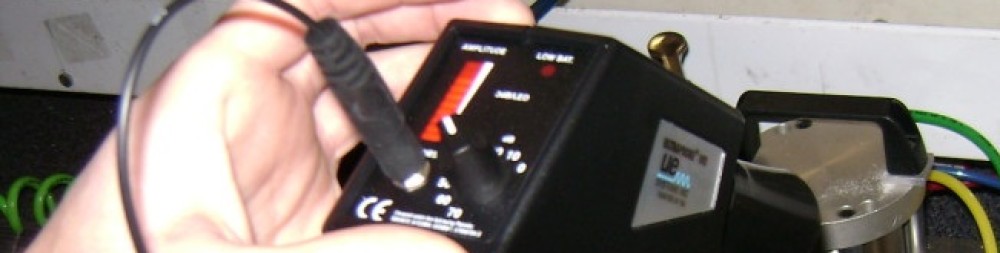
Predict failure before is occurs.Start using predictive tools, like Ultrasound for bearing anomalies and air leaks. Infrared for motor temperature issues and alignment.
Get out of the breakdown mode.Start to change your mind set. Instead of how do we fix this as quickly as possible, start to look at your most critical and troublesome pieces of equipment and think about “What do we do to keep equipment running”.
Where are you on the PF curve?

Understand the P-F Curve.
Reactive mode putting out fires, only doing repairs when the equipment is broken.
Predictive mode, using some predictive tools, like oil analysis, vibration analysis, or thermography.
Proactive mode. You have ranked your equipment, started collecting data and recorded it somewhere. You actually look at it and use it.
Get Money allocated: Work on convincing the corner office. Speak their language of dollars and cents to get funds available to update critical equipment, $1 dollar spent on preventative and predictive maintenance can translate to 5-10 dollars spend in breakdown mode.
This is how to get out of the breakdown mode.
5 Steps to a World Class Maintenance Organization is ready to be published next week.
Send me a note if you would like a discounted signed copy when it comes out. robert@maintenancegeek.com
Thanks,
Robert Kravontka
The Maintenance Geek


